

Introduction
Enterprise Resource Planning (ERP) is no longer just a back-office tool — in 2025, it’s the backbone of digital business growth in Malaysia. From SMEs to large enterprises, companies are moving beyond outdated systems to adopt smarter, cloud-first ERP solutions that drive agility, real-time insights, and innovation.
The Malaysian market for ERP systems is evolving rapidly, fueled by digital transformation, government incentives for SMEs, and rising demand for Industry 4.0 and even Industry 5.0 capabilities. Decision-makers are now prioritizing cloud ERP systems, AI-powered analytics, IoT integration, and mobile ERP applications to stay competitive.
In this blog, we explore the top ERP trends in Malaysia for 2025 — what’s driving adoption, what challenges remain, and how businesses can leverage these developments to scale smarter.
The Current ERP Landscape in Malaysia
ERP Adoption and Digital Transformation
Malaysia’s digital transformation journey is accelerating. According to Mordor Intelligence, the Malaysian digital transformation market is valued at over USD 10 billion in 2025, with ERP adoption being one of the core enablers. Many SMEs are now embracing cloud ERP solutions as subscription pricing, government digital grants, and modular systems make it easier to adopt.
Traditional on-premise ERP systems are struggling to keep up with:
- The need for real-time data
- Remote and hybrid work demands
- Compliance requirements under PDPA and e-invoicing
- Faster deployment cycles
This is why cloud-based ERP, AI, IoT, and mobile ERP applications are taking centre stage.
Why Malaysian Businesses Need New ERP Strategies
Legacy ERP Systems Create Bottlenecks
- High costs: On-premise ERP requires heavy investment in hardware, licenses, and IT maintenance.
- Limited scalability: Expanding operations means buying more infrastructure.
- Slow adaptability: Hard to integrate with new technologies like IoT or mobile apps.
- Data silos: Older ERP systems don’t integrate well, limiting real-time insights.
For industries like manufacturing, distribution, and services, these limitations translate to lost productivity, higher operating costs, and weaker competitiveness.

Top ERP Trends in Malaysia to Watch in 2025
1. Cloud-First ERP Adoption
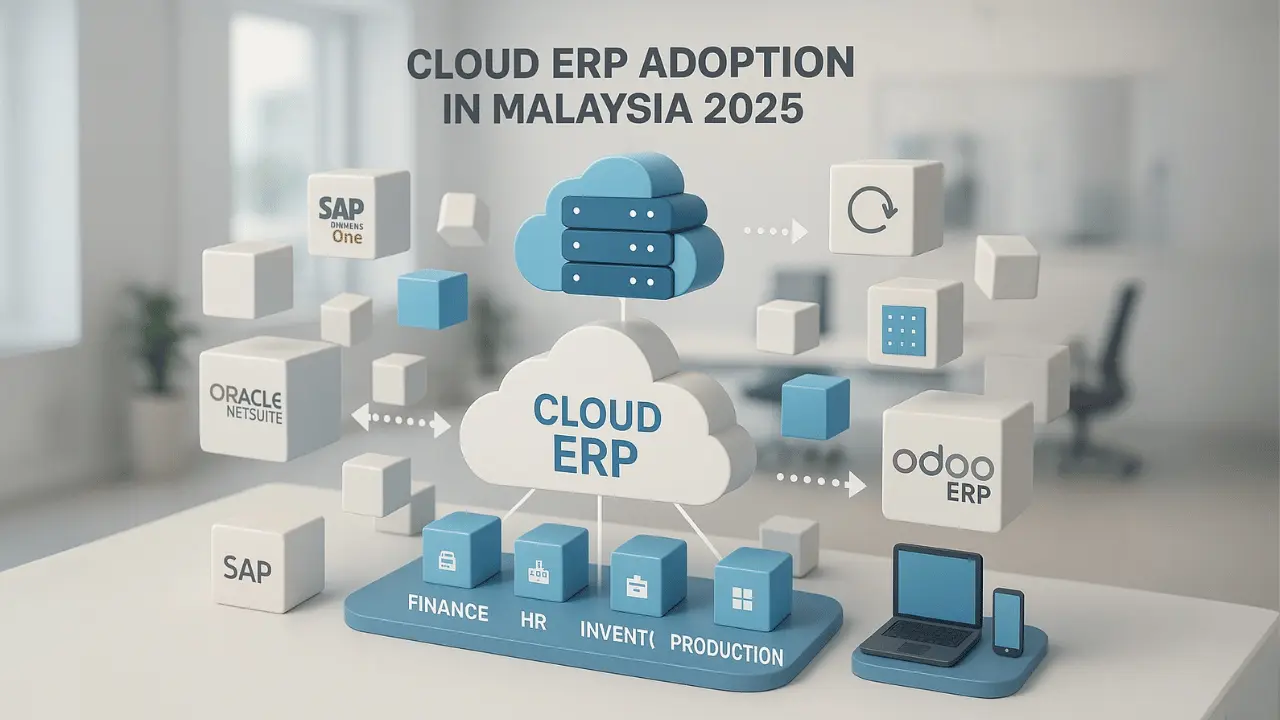
Cloud ERP systems are becoming the default choice for Malaysian companies. Instead of investing in servers and infrastructure, businesses subscribe to ERP software hosted in the cloud.
Why this trend matters:
- Lower upfront costs – subscription models are more SME-friendly.
- Scalability – add users or modules as the business grows.
- Automatic updates – no downtime for patches or upgrades.
- Remote access – work from anywhere, anytime.
ERP solutions like SAP Business One, Oracle NetSuite, Odoo ERP, and Microsoft Dynamics NAV are leading adoption.
2. AI-Powered ERP Systems
Artificial Intelligence is transforming ERP from a record-keeping tool into a decision-making engine.
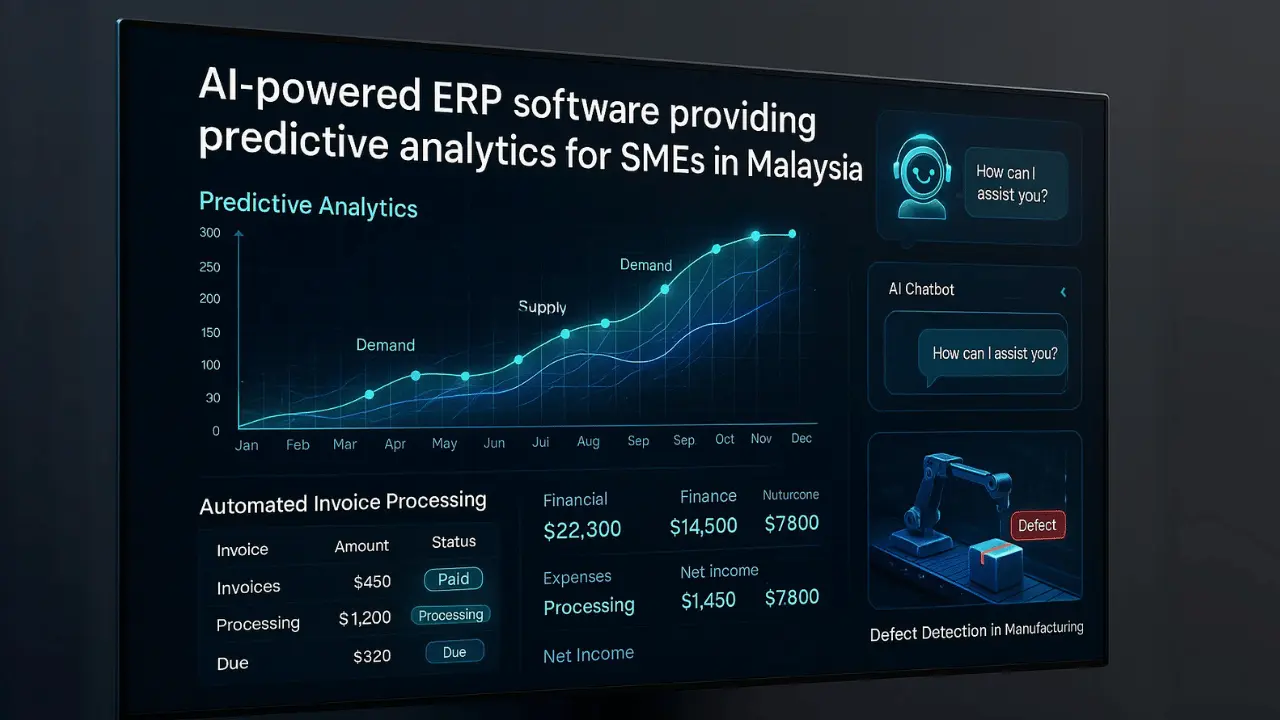
Key applications in Malaysia:
- Predictive analytics for demand forecasting.
- AI chatbots for ERP user support.
- Automated invoice processing and financial reconciliation.
- Vision AI for defect detection in manufacturing.
By 2025, 85% of business leaders in Malaysia believe AI integrated into ERP systems will provide a clear competitive advantage.
3. IoT Integration with ERP Systems
IoT (Internet of Things) is reshaping ERP for manufacturing in Malaysia. Sensors, machines, and connected devices feed real-time data into ERP applications.
Benefits of IoT-ERP integration:
- Real-time monitoring of equipment health.
- Automated supply chain visibility.
- Predictive maintenance reduces downtime.
- Energy monitoring for sustainability.
This trend is especially relevant for industries like electronics, automotive, and logistics, where Malaysia is a regional hub.
4. Mobile ERP Applications
With hybrid work and remote operations, ERP is going mobile.
Why mobile ERP matters:
- Approve purchase orders on the go.
- Track inventory in real time from warehouses.
- Field staff log updates instantly.
- Better collaboration across distributed teams.
Mobile ERP is no longer a nice-to-have; it’s a must-have in 2025.
5. Industry-Specific ERP Solutions
Generic ERP software often doesn’t meet specialised needs. Vendors now offer verticalised applications.
Examples in Malaysia:
- Manufacturing: quality management & production scheduling.
- Retail: POS & loyalty integration.
- Services: billing & resource planning.
Vendors like Sage X3, ERPNext, and Odoo ERP provide modular systems SMEs can adopt quickly.
6. Cloud Security and Compliance
As cloud ERP adoption grows, so do data protection and compliance needs.
Trends to watch:
- Vendors offering Malaysia data centres for sovereignty.
- Encryption and role-based access as standard.
- Tighter integration between cybersecurity and ERP consulting.
7. Rapid Application Development & DevOps for ERP
ERP rollouts used to take years. In 2025, businesses expect faster implementation.
Impact in Malaysia:
- Faster time-to-value for SMEs adopting ERP.
- CI/CD pipelines reduce errors.
- Agile methodologies align ERP with evolving processes.
8. SME-Focused ERP with Grant Support
The Malaysian government supports SME digitisation through programmes like MSME Digital Grant MADANI, covering up to RM 5,000 of ERP adoption costs. This lowers barriers for SMEs and makes 2025 the year ERP becomes mainstream for smaller businesses.
Data & Case Study: ERP in Malaysia
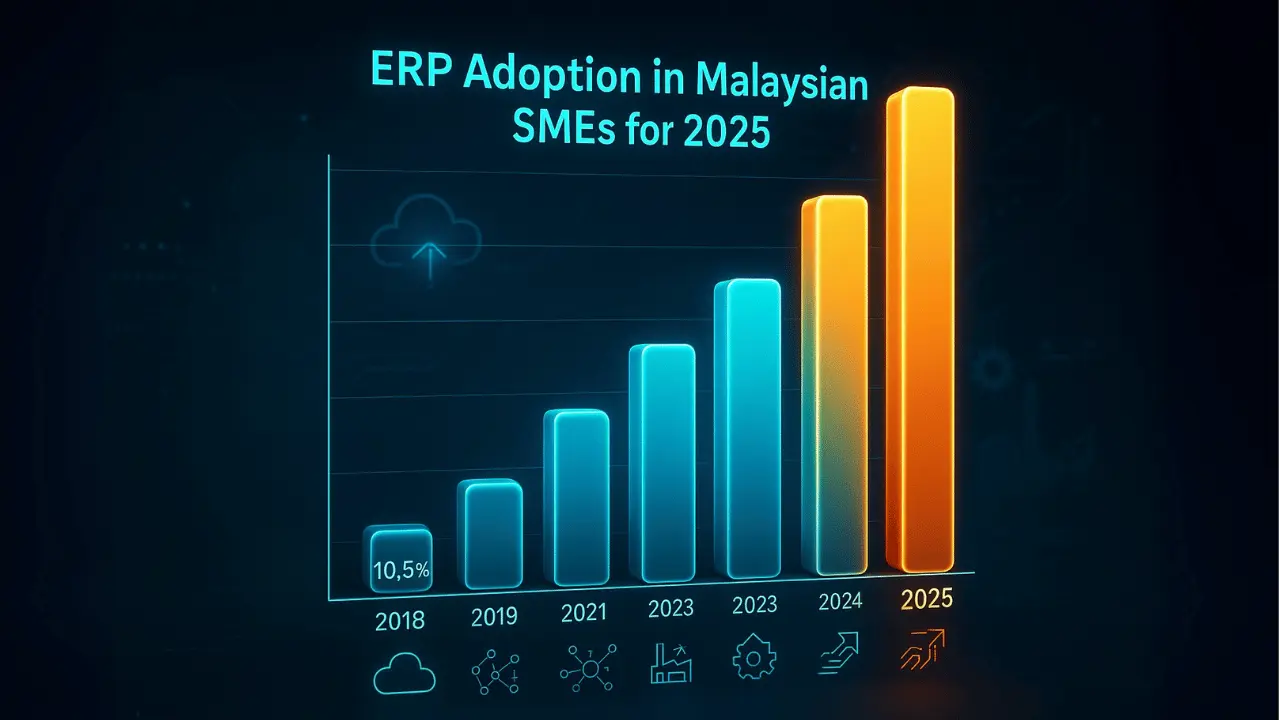
- Only 10.5% of Malaysian SMEs had adopted cloud ERP as of 2018 — adoption is now accelerating with cloud-first strategies and grants.
- A Penang manufacturing SME cut inventory costs by 20% and improved fulfillment speed after adopting cloud ERP with IoT.
- Digital transformation projects that include ERP can see up to 23% revenue growth (IDC, 2024).
FAQs
Q What are the top ERP trends in Malaysia for 2025?
Cloud ERP systems, AI-powered ERP, IoT integration, mobile ERP applications, industry-specific ERP solutions, and stronger security & compliance.
Q Why should Malaysian SMEs adopt cloud ERP?
Lower upfront costs, scalability, remote access, and automatic updates. With grants like MSME Digital Grant MADANI, adoption is more affordable.
Q How does IoT integration improve ERP systems?
Real-time machine, inventory, and logistics data enables predictive maintenance, automated supply-chain visibility, and better efficiency.
Q Are ERP systems secure for Malaysian businesses?
Yes. Modern cloud ERP provides encryption, role-based access, and audit trails; vendors with local data centres support PDPA.
Q How long does it take to implement an ERP system?
Scope-dependent; with RAD and DevOps, many SMEs go live in ~3–6 months.
Moving Forward with ERP
ERP is no longer optional — it’s the foundation of digital transformation in Malaysia. Companies that adopt cloud ERP, AI-driven insights, IoT connectivity, and mobile ERP tools will gain agility, compliance, and competitive edge.
If your business is planning an ERP upgrade, start by exploring trends that align with your goals and industry.
👉 Learn more at techqic.com
Conclusion
2025 marks a turning point for ERP in Malaysia. With cloud ERP, AI, IoT, mobile, and industry-specific solutions, organisations can transform operations and scale sustainably. Early movers will lead on visibility, cost control, and customer experience.
